
Can You Put a Temporary Ice Skating Rink in a Parking Lot?
A practical guide for shopping centers, cities, parks departments and event organizers considering a seasonal real-ice rink on an existing paved surface.
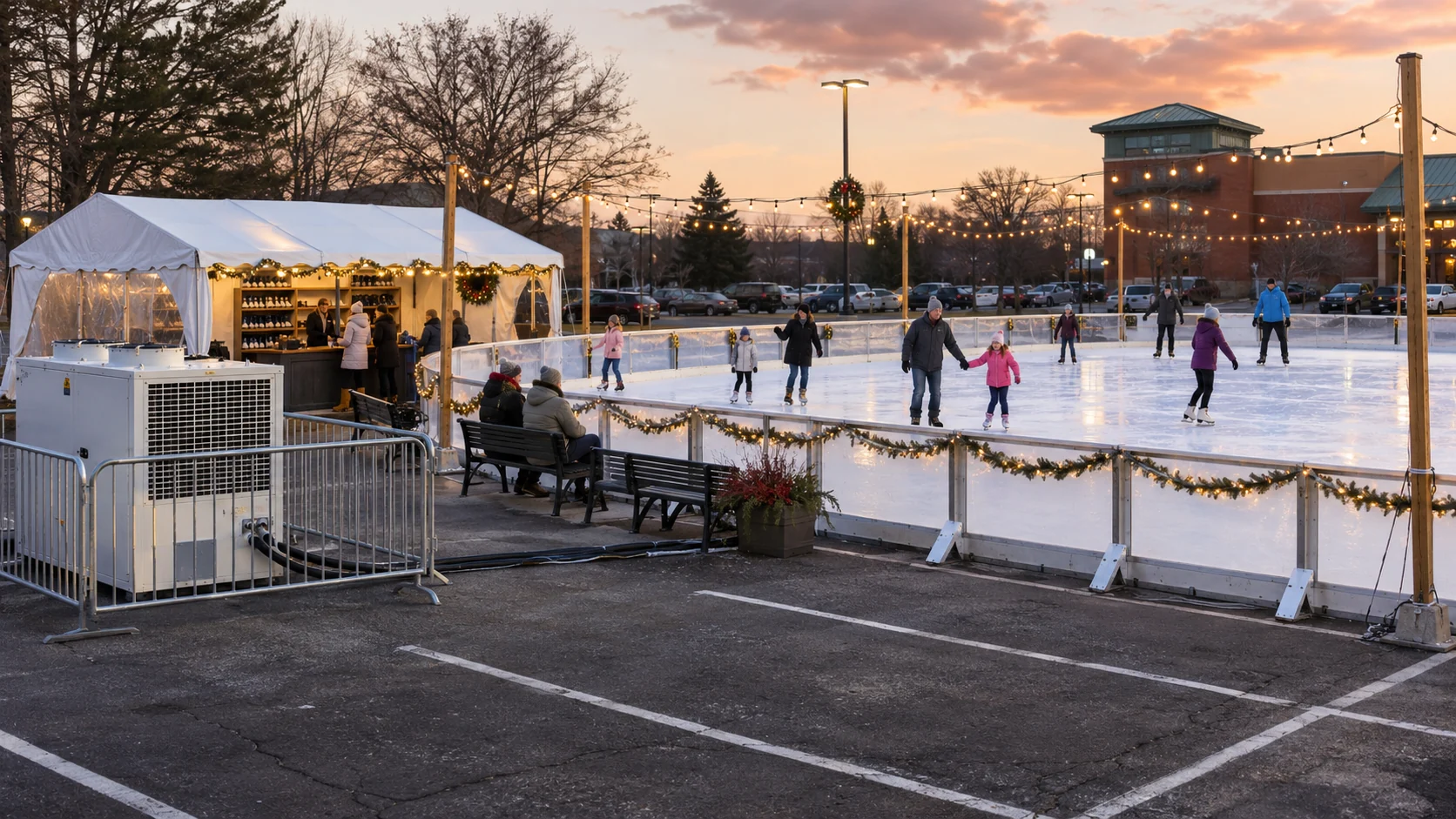
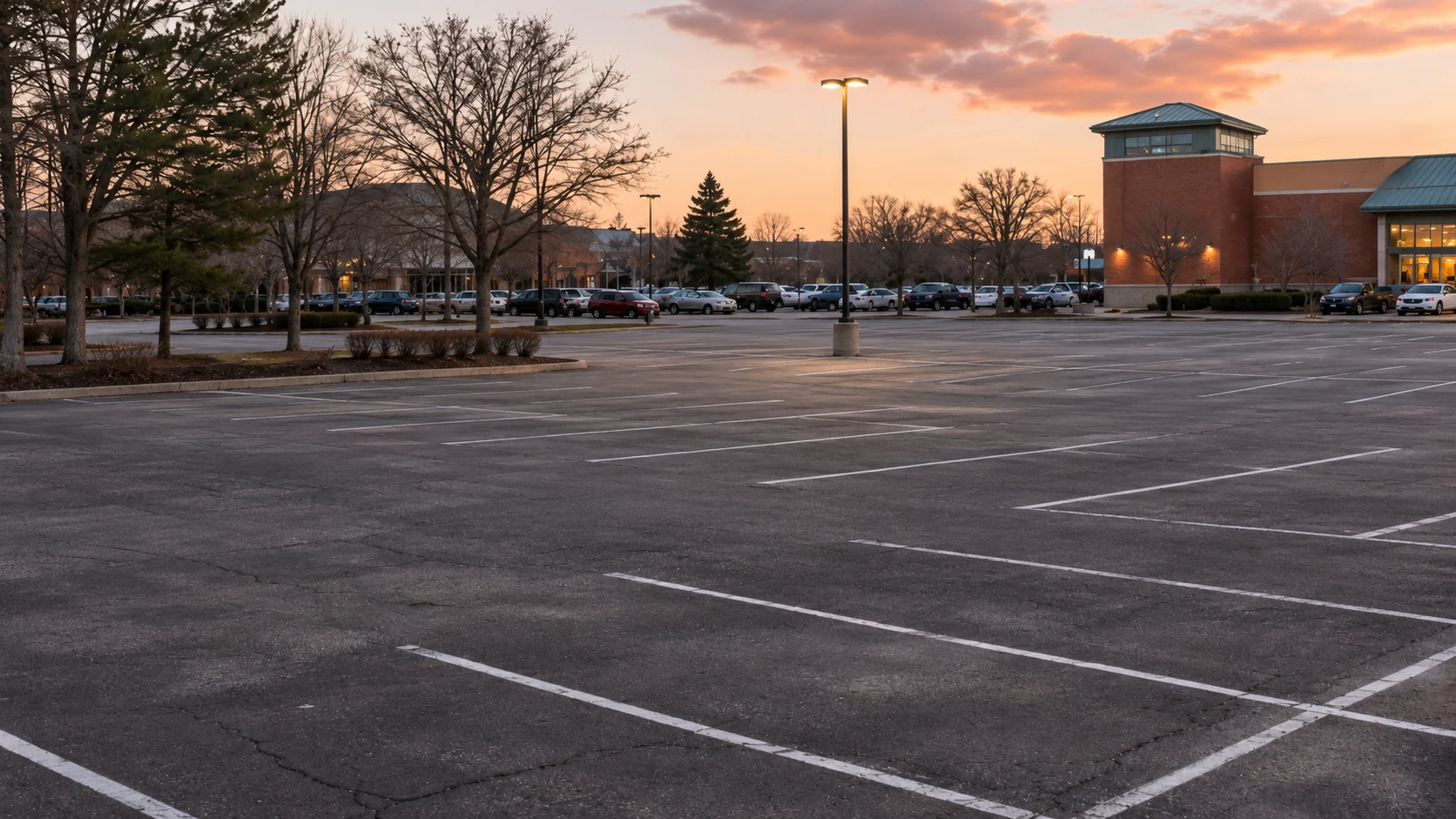
Imagine a shopping-center parking lot on an ordinary autumn afternoon. Cars come and go, shoppers walk toward the stores, and nothing about the location suggests winter recreation.
A few weeks later, that same space could become a holiday destination: families circling a refrigerated ice rink, children learning to skate, music playing, and visitors stopping for photographs beneath festive lights.
But can you really install a temporary ice skating rink in a parking lot?
Yes. A properly selected and prepared parking lot can accommodate a temporary refrigerated ice rink. Asphalt and concrete surfaces are commonly considered for seasonal installations because they already provide a paved area with vehicle access and nearby commercial infrastructure.
However, not every parking lot is suitable. The pavement's condition and slope, electrical availability, water supply, drainage, access, safety requirements and surrounding activities all influence whether the project is practical. Electrical power is a major feasibility requirement: most commercial temporary refrigerated rinks need substantial three-phase power, so its availability should be investigated early, alongside ground conditions, water and drainage.
Before requesting a proposal, event organizers should understand what is required beyond simply finding enough space for the ice.
What makes a parking lot suitable for a temporary ice rink?
The best parking-lot locations have a combination of suitable ground conditions, access to utilities and enough space for the supporting event.
The skating area itself is only one component. A complete public rink may also require:
- Space for refrigeration equipment and connections.
- A skate-rental and check-in area.
- Benches and a place for visitors to change shoes.
- Accessible pedestrian routes and entrances.
- Equipment-delivery and installation access.
- Emergency and maintenance access.
- Safe electrical routing and protected utility connections.
- Water supply and a plan for drainage and eventual ice removal.
For a shopping center, the location should also make sense commercially. A rink that blocks the busiest entrance or eliminates critical holiday parking may create more problems than benefits.
The objective is to select a space that works as a skating attraction without disrupting the property around it.
How much space do you need?
The first measurement is the usable skating surface, not the total event footprint.
Temporary recreational ice rinks can be designed in different sizes. Smaller rinks may suit a neighborhood event or compact plaza, while larger installations can accommodate more skaters and an expanded holiday program.
The following dimensions are illustrative planning examples, not recommended capacities or minimum installation requirements.
| Example skating surface | Ice area | Potential setting |
|---|---|---|
| 40 × 60 feet | 2,400 sq. ft. | Smaller community event |
| 40 × 80 feet | 3,200 sq. ft. | Downtown or shopping-center attraction |
| 60 × 100 feet | 6,000 sq. ft. | Larger seasonal destination |
These figures describe only the rectangular ice area.
The actual space required will be larger once perimeter boards, emergency access, chiller placement, visitor circulation, rentals and other facilities are added.
A 40-by-80-foot rink, for example, does not mean an organizer needs only a 40-by-80-foot section of parking lot.
A site plan should be developed before the final rink size is selected.
Do not calculate expected skating capacity solely from square footage. Appropriate capacity depends on the activity, age and experience of skaters, supervision, layout, applicable requirements and the operator's safety plan.
Does the parking lot have to be perfectly level?
This is one of the most important questions to ask before committing to a site.
Parking lots are usually designed with slopes that allow rainwater to reach drains or flow away from buildings. A skating rink, by comparison, needs a carefully controlled and sufficiently level ice-making surface.
A location that looks flat when cars are parked on it may have meaningful elevation changes across the proposed rink footprint.
That does not automatically rule out the property.
Depending on the rink system and site conditions, a contractor may be able to use an engineered leveling platform, suitable fill or another approved floor arrangement.
Some temporary rink designs can accommodate existing paved surfaces with protective layers and modular refrigeration systems. Others require more substantial preparation.
What matters is the finished rink surface and the performance of the complete installed system—not merely whether the asphalt looks smooth.
Before selecting a location, request an actual survey or reliable elevation measurements of the proposed area. The rink designer should determine what corrections, if any, are necessary.
The ASHRAE Refrigeration Handbook's ice-rink chapter discusses floor preparation, moisture and drainage as important engineering considerations.
Practical tip: Ask the rink provider how the proposed system handles the site's measured slope and whether a separate leveling platform is included in the proposal.
Can you install real ice directly over asphalt?
A temporary rink does not necessarily require a permanent concrete slab with refrigeration pipes built into it.
Some portable refrigerated systems use modular tubing or cooling mats installed above an existing prepared surface. A chilled fluid circulates through the tubing, allowing the system to remove heat from the water and maintain a frozen skating surface.
Other installations use different floor arrangements.
Depending on the design, layers beneath the refrigeration surface may provide protection, separation, insulation or moisture management.
The underlying asphalt is therefore part of the site—not automatically the finished floor on which ice is formed.
A qualified rink contractor should specify the required floor assembly and assess whether the pavement can accommodate the proposed installation, including concentrated equipment loads.
Organizers should also check for damaged asphalt, unstable patches, underground utilities, drainage structures and any restrictions on anchors or penetrations.
For an accessible explanation of the refrigeration process, read IceRinkGuide's How Temporary Ice Skating Rinks Are Made.
What electrical power does a temporary ice rink need?
Most commercial temporary refrigerated ice rinks require substantial three-phase electrical power to operate their refrigeration equipment.
This is one of the first things a shopping-center manager, parks department or event organizer should investigate when considering a parking-lot skating rink.
A typical household-style electrical outlet or the power available for parking-lot lighting will not be sufficient for a large commercial chiller.
Three-phase power: what should organizers look for?
Many commercial rental chillers used in temporary refrigeration applications operate on 480-volt, three-phase, 60-hertz electrical service (480V/3-phase/60Hz).
This is an example of common industrial equipment, not a universal requirement for every ice rink. Smaller systems and other refrigeration designs may use different electrical configurations.
The actual electrical demand also depends on the chiller's compressor motors, refrigeration capacity, pumps, controls and supporting equipment.
A property may have three-phase electricity without having the correct voltage or enough available capacity for the proposed rink.
For example, a building with 208-volt three-phase service cannot automatically supply a chiller designed for 480 volts. A qualified electrical contractor must determine whether a suitable transformer, electrical upgrade, alternative refrigeration system or temporary generator is appropriate.
Important: A 100-ton chiller's refrigeration rating does not mean it consumes 100 kilowatts or requires 100 amps. The electrical requirements must come from the actual equipment specifications.
What if the parking lot doesn't have three-phase power?
A temporary industrial generator may provide an alternative.
A generator can supply the necessary three-phase power when a suitable utility connection is unavailable or impractical.
However, the generator must be selected for the complete electrical system, including:
- The chiller's normal operating demand.
- Compressor and motor starting requirements.
- Circulation pumps and other essential equipment.
- Any additional loads connected to the same generator.
- Appropriate reserve capacity and operating conditions.
The electrical contractor and generator provider must confirm the required voltage, capacity, connections and startup characteristics.
Generators also introduce additional project costs, including delivery, fuel, refueling, maintenance, noise management and potentially permits or emissions requirements.
A generator should not be treated as a simple plug-in substitute for a utility connection. It must be engineered and operated for the application.
Questions to ask before choosing a parking lot
Before signing a rental or installation agreement, ask the property manager and a qualified electrician:
- Is three-phase electrical service available at or near the proposed rink location?
- What voltage is available — 208V, 240V, 480V or another configuration?
- How much unused electrical capacity is available?
- How far is the electrical connection from the proposed chiller location?
- Will temporary distribution equipment, cable protection or a transformer be needed?
- Would a generator be more practical than upgrading the existing electrical service?
- Who will supply, connect, inspect and pay for the temporary electrical system?
The refrigeration provider should supply the exact electrical requirements for its proposed equipment, including voltage, phase, frequency, operating current and applicable starting and protective-device requirements.
Bottom line: Confirming electrical power availability early can determine whether a proposed parking-lot rink is practical and can prevent major unexpected costs later in the project.
Where does the refrigeration equipment go?
Most temporary refrigerated rinks need space for equipment that removes heat from the ice-making circuit.
Depending on the system, this may be a packaged chiller or a larger temporary refrigeration arrangement located beside the rink.
This space should be identified during initial site planning.
The chiller may require sufficient ventilation and heat rejection, safe service access, suitable ground support, protected fluid connections and access for delivery vehicles.
A common planning mistake is reserving the entire available space for skating and leaving no practical location for the refrigeration system.
Other common conflicts include positioning equipment too close to pedestrian routes, obstructing a service entrance or placing it where surrounding buildings interfere with airflow.
The location must be reviewed against the specifications of the actual equipment and any applicable codes.
A site drawing should identify the chiller location separately from the skating area.
What about water and drainage?
Water is essential for building and maintaining a refrigerated skating surface.
During installation, water is applied progressively and frozen into a usable ice sheet. Later, additional water may be needed for resurfacing and maintenance.
The rink operator must therefore have reliable access to a suitable water supply.
Depending on local rules and the chosen connection, this may also involve approved hoses, backflow protection, metering and restrictions on using a hydrant or other municipal supply.
Drainage is equally important.
Although the skating surface is frozen during normal use, a project still needs a plan for rainwater, snow or ice removed during maintenance, water from cleaning activities and eventual end-of-season thawing.
Parking-lot drains should not be assumed to be suitable disposal points for every type of water or waste generated during operation.
In particular, heat-transfer fluids such as glycol must be managed according to the fluid's specifications and applicable environmental requirements. They should not be discharged into storm drains.
Before installation, identify where water will go if the rink is thawed or removed, how neighboring entrances and walkways will remain protected, and who is responsible for cleanup.
A well-designed drainage plan can help protect the underlying property as well as the event.
What happens to the parking spaces and traffic flow?
For a shopping center, this can be as important as the refrigeration design.
A temporary rink may occupy an area normally used for customer parking, deliveries or circulation. It may also attract additional visitors who need parking elsewhere on the property.
Site managers should review the project against the busiest periods of the proposed operating season.
Questions to examine include:
- Which parking spaces would become unavailable?
- Can customers still reach the stores conveniently?
- Will delivery trucks have adequate access?
- Are fire lanes and emergency routes preserved?
- Can visitors enter without crossing active vehicle traffic?
- Will queues interfere with nearby businesses?
- Can the property support added pedestrian activity after dark?
In some locations, the commercial benefits of a holiday attraction may justify temporarily reassigning parking spaces.
In others, an available but poorly situated lot may prove unsuitable.
The goal is to create an attraction that complements existing businesses rather than competing with them for essential operating space.
How should the entrance and visitor facilities be arranged?
A rink is not simply an ice surface surrounded by boards.
Visitors need to find the attraction, check in, obtain skates, change footwear, reach the rink entrance and leave safely.
Even relatively modest installations can require thoughtful separation between people waiting to skate, those currently skating and customers moving through the surrounding property.
For a shopping-center installation, consider placing check-in and skate rental near an established pedestrian route while keeping the refrigeration equipment away from casual foot traffic.
Benches, shade or weather protection, signage, waste receptacles, first aid and nearby restrooms can all affect the visitor experience.
Accessibility should be part of the original layout, not a final adjustment made once the rink is installed.
The Los Angeles Department on Disability's guidance for temporary and outdoor events specifically addresses accessible routes, parking, temporary event facilities and emergency planning for unconventional spaces such as parking lots.
Local accessibility requirements and the event's particular setup must be reviewed by the responsible organizers and qualified professionals.
Can you operate a parking-lot ice rink in a warm climate?
Yes, a properly designed refrigerated rink may be able to operate where outdoor temperatures are above freezing.
That is one reason seasonal real-ice attractions can exist in places that rarely experience sustained winter cold.
However, refrigerated does not mean unaffected by weather.
Sunlight, rain, humidity, wind, ambient temperature and the number of skaters all influence heat gain and operational demands.
ASHRAE identifies environmental conditions and outdoor radiant heat as important factors in sizing refrigeration equipment.
A parking lot exposed to direct afternoon sunlight may present different challenges from a shaded location.
Organizers should ask suppliers how equipment capacity and operating expectations have been evaluated for the event's specific location and dates.
A warm-climate installation should also have an operating plan for severe weather, excessive heat, heavy rainfall and any conditions that make the ice unsafe.
No responsible site assessment should promise uninterrupted skating regardless of weather.
Do you need permits to install a temporary rink in a parking lot?
Potentially, yes. Requirements depend on the jurisdiction, property ownership, event type and proposed installation.
A privately owned shopping center does not automatically bypass municipal review because the event is temporary.
Depending on the circumstances, approvals may involve planning or zoning, building and electrical departments, fire officials, public-event permitting, temporary structures, accessible routes, food service, signage and noise restrictions.
Property ownership and lease arrangements can introduce additional approval requirements.
For example, a shopping-center manager may need consent from a property owner or landlord before occupying parking spaces, changing circulation patterns or installing temporary electrical infrastructure.
An outdoor rink might also require an event insurance review and agreements that clearly assign responsibilities for installation, operation, maintenance and damage to property.
Start these conversations before signing a final equipment agreement.
How much does it cost to turn a parking lot into an ice rink?
There is no reliable universal price based on rink dimensions alone.
Two sites with similar skating areas can produce significantly different project costs because one may already have accessible electrical power, suitable ground conditions and nearby facilities, while the other needs a platform, generator and additional infrastructure.
A realistic planning budget should identify the major categories separately.
| Budget category | Questions to ask |
|---|---|
| Ice rink equipment | Is the floor rented, purchased or included in an event-services package? |
| Refrigeration | Is the chiller included, and who pays for electricity? |
| Site preparation | Is leveling, protection or a temporary platform required? |
| Delivery and installation | Are transport, installation, removal and restoration included? |
| Visitor amenities | Who provides skates, seating, ticketing, lighting and shelters? |
| Operations | Who hires and supervises staff and maintains the ice? |
| Insurance and permits | Which approvals and insurance policies are required? |
| Contingencies | How will utility or weather-related changes be handled? |
For early budgeting, organizers should request proposals based on an actual site drawing, desired operating period and defined responsibilities.
A quote that includes only the rink surface may not be comparable to one that includes installation, staffing, utilities and complete operations.
What should you check before requesting proposals?
The best way to avoid wasting time is to determine whether the proposed location is reasonably feasible before asking suppliers for a full price.
Use this preliminary site-screening checklist.
Parking-lot ice rink suitability checklist
Completing this checklist does not replace engineering or permit approval. It helps identify the questions that must be resolved before the project can move forward.
For a more comprehensive project-planning resource, download IceRinkGuide's Temporary Ice Rink Project Planning Checklist (PDF).
A practical example: evaluating a shopping-center parking lot
Consider a shopping center interested in installing a 40-by-80-foot refrigerated ice rink for a six-week holiday season.
The property has a paved area near restaurants and stores, with existing lighting and convenient pedestrian access.
At first glance, the location seems promising.
But before moving ahead, the event organizer needs answers to several important questions.
Space: Is there room for the 3,200-square-foot ice surface plus rentals, spectator circulation, refrigeration equipment and emergency access?
Ground conditions: Does the pavement slope require a temporary leveling system?
Utilities: Does the property have sufficient electrical capacity for the selected refrigeration equipment, or would a separate power solution be needed?
Operations: Will the shopping center operate the event, contract a professional rink operator, or work with an outside event producer?
Approvals: Can the property accommodate the change in parking and circulation, and what temporary-use permits are required?
Budget: Who pays for utilities, site protection, installation, insurance and restoration?
Those answers—not the rink dimensions alone—determine whether the idea is practical.
This example is hypothetical and illustrates the planning process rather than describing a real installation.
Parking lot versus plaza versus park: which is better?
A parking lot is one possible location, but it should not be assumed to be the best choice.
| Site type | Potential advantage | Main planning concern |
|---|---|---|
| Parking lot | Paved area and convenient visitor access | Lost parking, pavement slope and traffic circulation |
| Downtown plaza | Visibility and existing pedestrian activity | Utilities, structural restrictions and public access |
| Public park | Community setting and possible recreation infrastructure | Ground preparation, weather, landscaping and access |
| Shopping-center courtyard | Strong connection with retail and dining | Limited working area, deliveries and property restrictions |
| Indoor event space | Protection from rain and direct sun | Floor loading, utilities, humidity and building systems |
An organizer should compare several possible locations before committing to the most visually appealing one.
In some cases, moving the proposed rink a short distance can reduce site-preparation costs or avoid a major utility challenge.
Frequently asked questions
Can a portable ice rink be installed on an asphalt parking lot?
Yes, some temporary refrigerated rink systems can be installed over properly prepared asphalt. The contractor must evaluate slope, surface condition, load requirements, drainage and the approved floor arrangement. An asphalt surface does not automatically mean the rink can be installed without preparation.
Do you have to dig up the parking lot?
Not necessarily. Many temporary rink systems are designed to be removed at the end of a season. Whether anchors, surface modifications or other work are necessary depends on the design and site conditions. Any pavement penetrations or underground utility risks should be reviewed before work begins.
Can a parking-lot ice rink operate when it is 60°F outside?
Potentially, yes. Refrigerated rinks can operate above freezing, but performance depends on the system's capacity and environmental conditions, including sun, humidity, wind and rainfall. The supplier must evaluate the particular installation rather than guarantee operation based on a single air-temperature figure.
Does a temporary ice rink need three-phase electricity?
Most commercial temporary refrigerated rinks use chillers that require three-phase electricity. Many larger U.S. rental chillers specify 480V three-phase power. The exact requirement depends on the selected equipment. When suitable utility power is unavailable, a correctly sized generator may be an alternative. Always obtain the supplier's electrical specifications before confirming the site.
What happens to the parking lot when the rink is removed?
A properly planned removal includes dismantling equipment, handling remaining ice and water appropriately, removing temporary structures and restoring the area in accordance with the project agreement. The contract should address pre-existing pavement conditions, any required repairs and final site inspection.
How early should a shopping center plan a holiday ice rink?
Begin planning well before the intended opening season. Equipment availability, permits, site engineering, electrical arrangements, insurance and installation scheduling can require substantial lead time. A complex project should not be treated as something that can automatically be organized in a few days.
Is real ice or synthetic ice easier to put in a parking lot?
Synthetic panels generally avoid the refrigeration and ice-making requirements of real ice, but they provide a different skating experience and still require suitable ground conditions, safe installation and operating arrangements. The choice should reflect the event's objectives, visitor expectations, operating resources and budget.
The bottom line: start with the site, not the rink
A parking lot can become much more than a place to leave cars during the holiday season.
With the right site, equipment and operations plan, an ordinary paved space can support a temporary real-ice attraction that brings people together and creates a reason to visit surrounding businesses.
But the best projects begin with practical questions.
Is the pavement suitable? Is power available? Where will the chiller go? Can visitors arrive safely? Who will operate the rink, and what happens when the season ends?
Answering those questions early makes it easier to evaluate whether the location deserves a formal proposal.
For the next stage of planning, read How to Plan a Temporary Ice Skating Rink for Your City or Holiday Event, which covers project objectives, equipment, budgeting, operations and procurement in greater detail.
About IceRinkGuide: IceRinkGuide is an independent informational resource about skating venues and temporary ice-rink planning. It does not sell, design, engineer or install rink systems. Project-specific feasibility, technical and regulatory decisions should be evaluated with qualified professionals and the responsible authorities.
Research reviewed November 5, 2026.
Have a rink-planning question or a project to tell us about? Contact Tim at IceRinkGuide.
When writing, please include your city, approximate rink dimensions, proposed season and the question you're trying to answer.
IceRinkGuide is an independent skating-information publication, not a rink equipment seller or event operator. Contacting the publication does not constitute a supplier quotation request or a promise of professional project consulting.